|
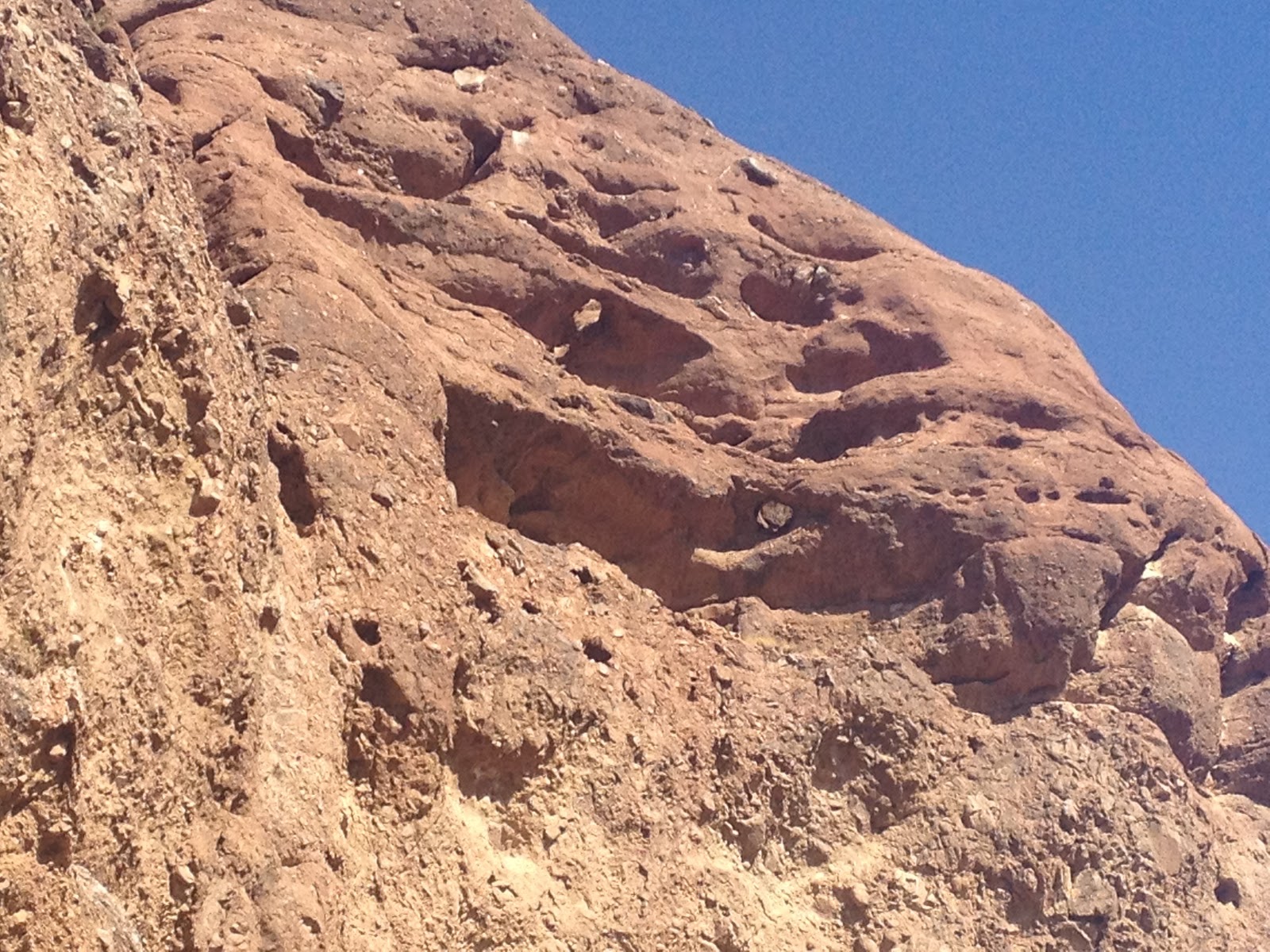
| Tim Hightower's March 2012 Camelback rescue. |
At least nine people have been rescued in six incidents so far this year at Camelback Mountain. Most were treated for heat exhaustion and dehydration.
The two primary hiking trails of Camelback, Echo Canyon and Cholla Trails, are both just over a mile long. That little number, "1," has sure fooled a lot of people. The rocky trails rise more than 1,000 feet in that mile-plus walk, and both are not only steep, they've got places where the use of hands is mandatory. The effects of a heat illness can set in within minutes of a scorching summer hike up Camelback Mountain under full sunlight. Even in the morning and evening, or in spring or fall, when the sun's rays are less intense, susceptible people with too little water can die in as little as two to four hours on any mountain trail in Phoenix. I'd estimate at least one hiker per year has died from the heat in the last few years, though the average went up a little with the deaths of three aging gold-seekers from Utah who died in the Supes a couple of summers ago.
Besides the deaths and heat-related rescues on Camelback, no doubt many more hikers have suffered a miserable outing because they brought too too little water. On a very hot day, 110-plus, I (generally) don't hike between 10 a.m. and 5 p.m. Outside of those hours is fine, even if it's 111 or slightly higher, though if the air's too thick with humidity -- not uncommon in cumulonimbus-heavy monsoon season -- even 105 can be oppressive enough to make me wish I was at the gym. If you're not very acclimated to the heat, go with the temperature you're comfortable in.
In the heat at Camelback, the pale red landscape becomes like magma. The cicadas providing a sizzling soundtrack. Mini-canyons are brick ovens. The heat zaps strength from your legs and fries your brain. If sunlight has lit up a rock formation for very long, forget about climbing. The stone feels like an electric stove-top on high. Except for those cicadas, it's lonely. Very few people are out here with you. No need to worry about rattlesnakes on super-hot days -- they're in their cool burrows, not being Crockpotted by the air-temperature.
I take about a liter of water for every hour I expect to be at Camelback in temperatures over 95-100. I pack a Nalgene bottle with ice, then fill the spaces with water. Doing this ensures I'll still have at least some ice, and therefore really cold water, by the time I get to the top. On the hottest days, I'll take an additional small water bottle or even another ice-packed Nalgene. I move slower in extreme heat, adding to the total time out there. It's also good to dump icewater over my head or body at times. Getting lost or going too slow on a hot day can turn into a nightmare if you don't have a similar quantity of water on you. One rescue two years ago involved a couple of women who were on one of the main trails for five hours before authorities were called. After writing about that one for Valley Fever, I also published "Ten Tips for Avoiding Heat Stroke."
Here's what the National Park Service's Grand Canyon site has to say:
During the summer months, your fluid/electrolyte loss can exceed two quarts per hour if you hike uphill in direct sunlight during the hottest part of the day.
If you've never done Echo Canyon or Cholla Trail before and you're not with anyone who has, it will probably take about 45 minutes or more to get to the top. That means you should take at least one liter. Taking another liter or even two might be wise, because you'll want that much water if you spend three hours up there.
Heat-related illnesses are probably the most common reason for mountain rescues on Camelback. But as I've documented previously, a surprising variety of problems can happen up there.
Besides not bringing enough water on a hot day, I see a lot of hikers on the trail near sunset without flashlights. They end up having to pick their way down the boulders in the near-dark. A scary experience for some. Fortunately, I've found that it never gets completely dark at Camelback. On a Grand Canyon trail below the rim on a moonless night, the darkness envelopes you like a liquid if you shut off flashlight. It's like the darkness inside a cave except for the canopy of stars. Camelback trails, by contrast, are always bathed in a faint, eerie glow of reflected city lights. I've intentionally hiked Echo Canyon at night without a headlamp, but I know the trail quite well. Most visitors caught after dark without a light are in a for a struggle and an adventure. Sometimes they go off the main trails, making things worse. In March, that's what happened to former Arizona Cardinals player Tim Hightower.
 | |
| Hightower and friend in the media spotlight before rescue. |
Press accounts say Hightower and a female friend were hiking the mountain when they got off trail in the dark and phoned for a rescue. Channel 10 News showed the burly player with his head hung low, hopping into an SUV without talking to a camera crew. The announcer notes with glee that he seems embarrassed.
I find the incident ironic not just because a burly he-man pro football player needed the rescue, but because in the latter two years of Hightower's time with the Cards, John Lott, the team's strength and conditioning coach, was having players march up and down Echo Canyon trail to supplement their exercise routines. In other words, you'd think Hightower would have known what he was doing on Camelback. This rescue, though, brings up other issues -- overzealous rescue and the overreliance on cell phones to save our butts. These people were nowhere near death's door. I'm quite sure that Hightower and his friend would have figured out a way down and out of the 400-plus-acre park, which is surrounded by city lights. Either they would have done it that night and ended up scratched and bruised, or would have suffered a miserable night on the hill and walked out in the morning. But odds are they would have been fine, and unless their cell phone battery was low, there was no life-or-death reason to call in the cavalry. Not then, anyway.
Another way to look at it: The city of Phoenix has the helicopter and all of those firefighters sitting around, probably with nothing better to do, so why not use that phone? Perhaps Hightower would have sucked it up and rescued himself if he'd been alone, but he had the woman to think of. Then again, maybe I'm being sexist -- maybe she's the bigger outdoorsperson and he insisted on calling in the rescue. Either way, one or both made the decision to call, and they likely knew the TV crew would show up. They always do.
Here's the roundup, as best I could find on the Internet:
* In January, ABC-15 broadcast a story about how 10 people had been rescued from Camelback Mountain in a two-week period.
* The Tim Hightower Camelback Debacle came in March.
* June: A woman in flip-flips and little water is overcome by the heat at Camelback.
* July: Two men suffer heat problems on Echo Canyon Trail. One is cramping up so bad, firefighters decide to airlift him out.
* August: Steve Amren of San Antonio got lost while hiking Echo Canyon. Somehow, he became "stuck in a ravine" and also became seriously dehydrated. Here's his quote from that story: "I just got up on the wrong path, and I got into an area where I couldn't get out because I was too tired."
* September: Two teens start hiking Camelback at about 1 p.m. Three hours later, they're off the main trail, lost and suffering from severe dehydration. This one shows clearly just how fast these symptoms can appear in some people.
Having too little water is a big factor in these kinds of stories, but it's also true that some people are more susceptible to heat-related illnesses than others, for different reasons.
Yet to have a great adventure, certainly one of my goals, it's necessary to push your physical limits. As long as this is done with forethought to what sort of experience you're about to have, a trip to Camelback is safe and fun. Except when it's not. Which is the point of this adventure blog.
It may be somewhat macabre to keep returning to the subject of rescues, injuries and other serious human calamities at Camelback. But the thrills and spills help make up the mystique of this place. The potential danger is a reason to respect the mountain. As a vehicle for excitement, the risk is also a reason to go there. So I'll pushing myself right up to -- but, with luck, never surpassing -- the point that results in the arrival of the Phoenix Fire Department and local news media.